When building a stronger physique or improving compound lift numbers, the forearms often face an unheralded test of endurance. Heavy pulling exercises demand not only raw back and hip power but also continuous muscular tension throughout the hands and wrists. Understanding how grip strength develops as a byproduct of these movements helps lifters manage fatigue and recognize natural adaptation patterns.
In many training sessions, the limiting factor for a heavy deadlift or barbell row is not the primary target muscle group, but rather the hands letting go. This dynamic highlights the intricate relationship between primary movers and secondary stabilization muscles. For broader context on how individual routines intersect with technical milestones, take a look at our overview page to see how different training experiments are documented.
The Mechanics of Secondary Engagement
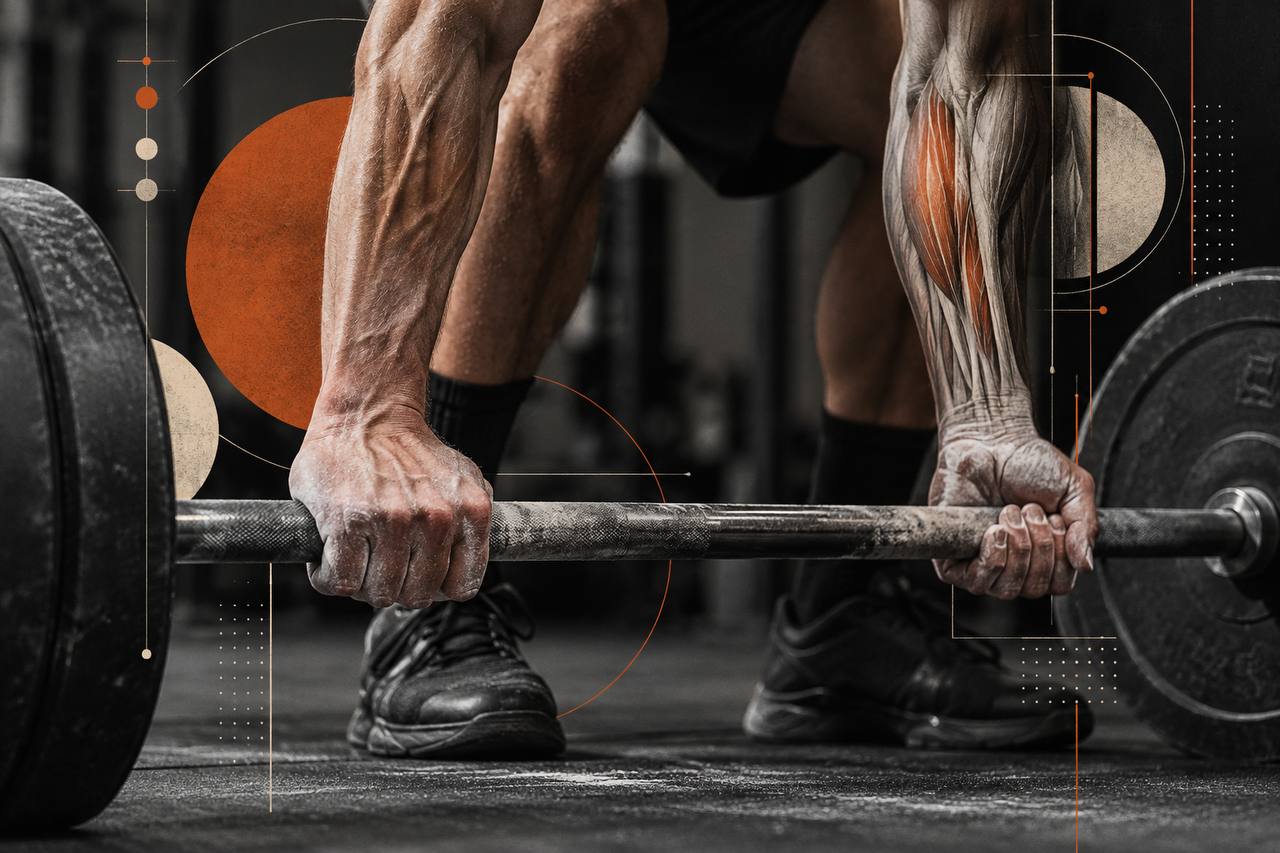
Compound pulling exercises rely on a closed kinetic chain where the hands act as the direct physical link between the body and the external load. Movements like deadlifts, barbell rows, and pull-ups require the finger flexors and wrist stabilizers to isometricly contract under significant stress for extended durations.
This sustained tension forces the forearm muscles to work hard without changing length. Unlike dynamic lifts that feature concentric and eccentric phases, isometric grip endurance challenges the nervous system to maintain continuous motor unit recruitment while blood flow is restricted by the tight squeeze on the bar.
Why Forearm Fatigue Appears Before Primary Muscle Exhaustion
A common frustration during heavy pulling sessions is experiencing hand slippage long before the back or hamstrings reach their true limit. This disparity arises because smaller muscle groups in the forearms accumulate local metabolic fatigue much faster than larger muscle groups like the latissimus dorsi or glutes.
As repetitions accumulate or time under tension increases, microscopic energy reserves in the forearm flexors deplete. The nervous system then struggles to sustain the high-threshold firing rate required to keep a heavy steel bar from sliding out of the palm, leading to premature grip failure.
Key Factors Influencing Grip Adaptations
Balancing Direct and Indirect Stimulus
While heavy rows and deadlifts provide a substantial baseline stimulus for the forearms, relying solely on compound movements may leave specific gaps in complete forearm development. Indirect work builds incredible isometric endurance, but supplementing with controlled variations can help address sticking points.
Sustainable strength progress in pulling movements depends on matching overall back capacity with adequate structural support in the hands and wrists.
What to Expect During Progression
As training volume increases over weeks and months, the connective tissues and muscle fibers in the forearms gradually adapt to higher loads. Callus formation on the hands also helps reduce skin pinching, allowing lifters to hold heavier weights with greater confidence and comfort.
However, adaptation in tendons and ligaments occurs at a slower pace than muscular recovery. Recognizing this timeline helps prevent overtraining injuries in the elbows and wrists when ramping up pulling frequency or absolute intensity.