In defensive boxing, footwork is not merely about moving quickly across the canvas; it is the structural foundation that keeps you balanced, protected, and ready to counter. When your center of gravity remains centered over your base, you can absorb pressure or slip punches without losing your posture. Clean mechanical execution prevents you from being caught flat-footed when an opponent attacks.
Mastering defensive movement requires understanding how weight distribution dictates your reaction time. If your feet are too wide or too narrow, your recovery windows stretch out, leaving you vulnerable to clean punches. This article breaks down the mechanics of structural balance, lateral sliding, pivoting, and maintaining safe distance in the ring.
Why Balance Dictates Defensive Success
Defensive resilience starts from the ground up. Every successful slip, roll, or pull-counter relies on maintaining an optimal weight split between your lead and rear foot. When a boxer leans too far forward, their ability to retreat instantly vanishes. Conversely, standing too upright reduces rotational power and stability.
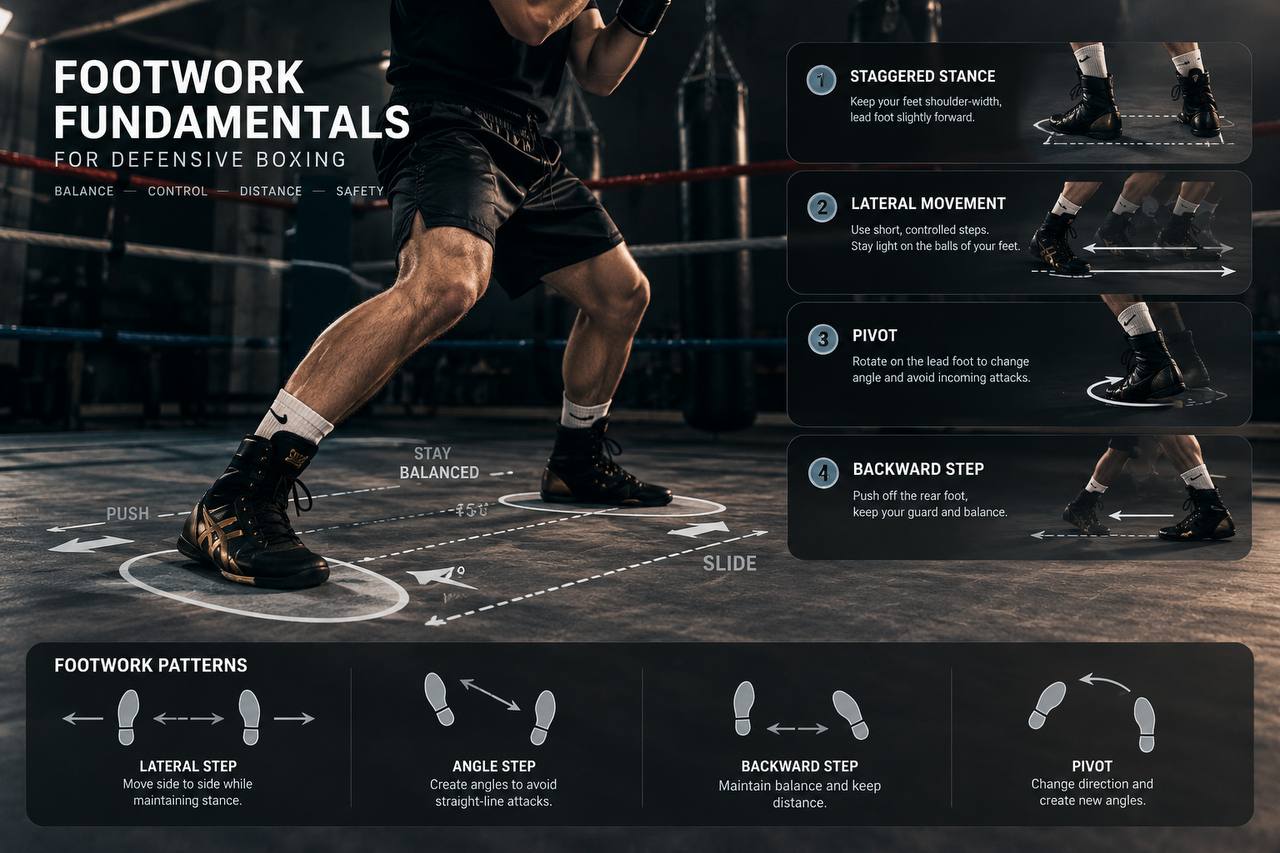
The Mechanics of the Staggered Stance
A solid defensive stance maintains feet roughly shoulder-width apart with the rear heel slightly elevated. This subtle elevation allows the calves to act as natural shock absorbers and triggers immediate rotational movement. Your weight should hover comfortably in the middle, ready to shift dynamically depending on whether you need to step offline or drop back.
Executing Controlled Lateral Movement
Moving side-to-side without crossing your feet is a core prerequisite for effective defense. Crossing your feet ties your legs together and instantly destroys your base of support. By taking short, sharp steps where the lead foot initiates lateral travel followed immediately by the rear foot, you keep your balance intact throughout the exchange.
Keep your steps compact and stay light on the balls of your feet to ensure you can change direction instantly.
Using Pivots to Deflect Straight-Line Pressure
When an opponent rushes forward with straight punches, moving straight back often runs you directly into their momentum. A tight pivot on the lead foot changes your angle instantly, forcing the opponent to punch empty air. Mastering this rotational shift lets you turn defensive evasion into an immediate opportunity to reset or counter.
Common Footwork Mistakes to Avoid
Practical Checklist for Ring Posture
Frequently Asked Questions
What is the ideal foot placement for a defensive boxing stance?
Keep your feet roughly shoulder-width apart with your weight evenly distributed and your rear heel slightly elevated to allow instant movement.
Why is crossing your feet dangerous in the ring?
Crossing your feet eliminates your base of support, making you extremely vulnerable to being knocked off balance by light contact or pressure.
How do pivots help with defensive evasion?
A pivot allows you to rotate on a planted lead or rear foot, shifting your angle offline so oncoming straight attacks miss entirely.